





KRUGER · CENTRAL SAVANNA · BIG CATS
Satara Where the great cats rule the savanna
Open savannas, lions at dawn, grazing herds and the celebrated N’wanetsi corridor: experience the essence of central Kruger safari.
Satara: central Kruger’s iconic savanna stage.
Satara is among Kruger’s most celebrated wildlife bases. Its marula and knob-thorn savanna on basalt soils offers broad views and concentrations of grazers. SANParks highlights lion, leopard and cheetah.
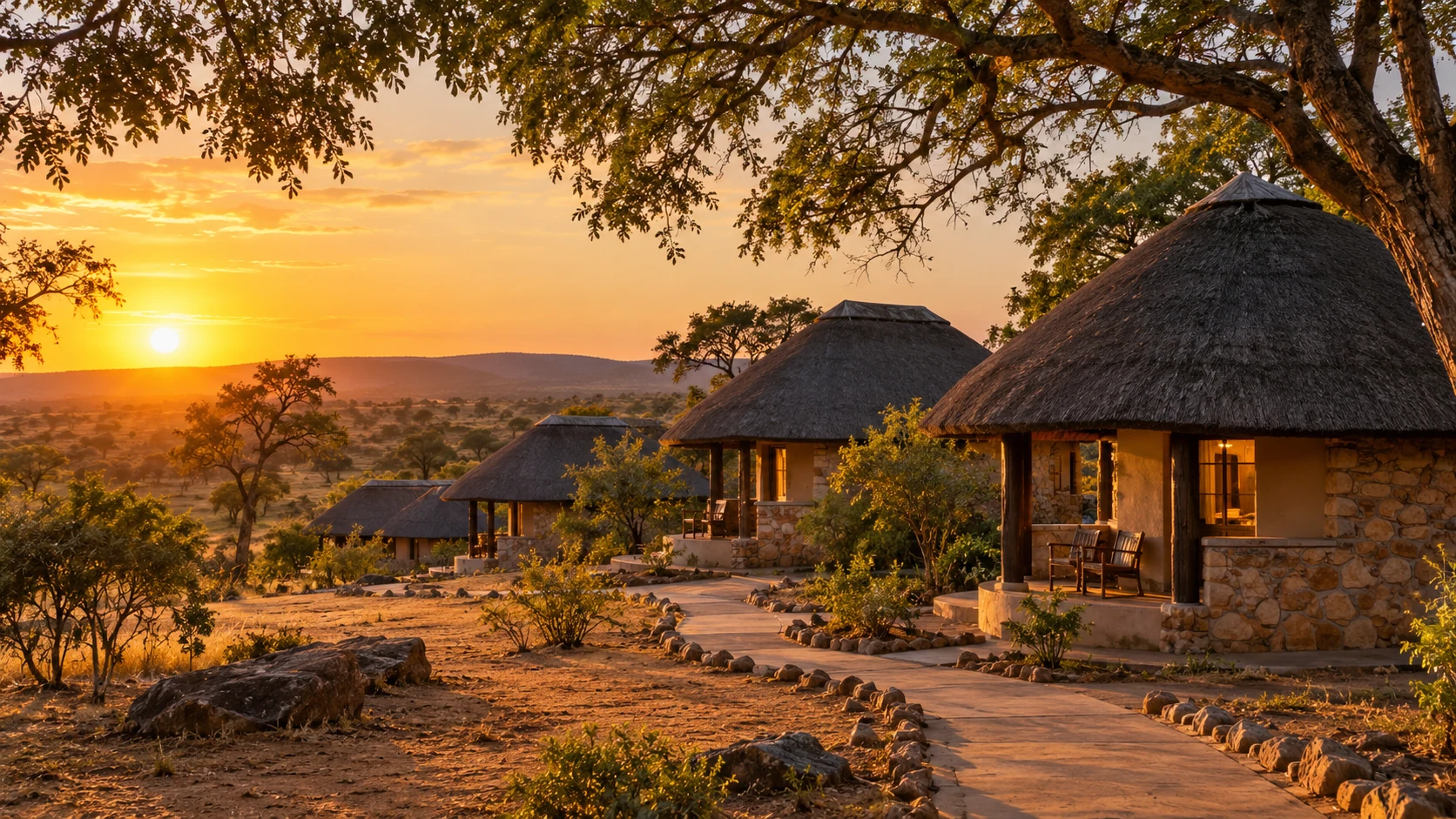
Circular bungalows, nighttime calls from hyenas and lions, and access to S100, H7 and H6 create a classic safari atmosphere. The area is also rewarding for harriers and changing light over the plains.
Official Satara information ↗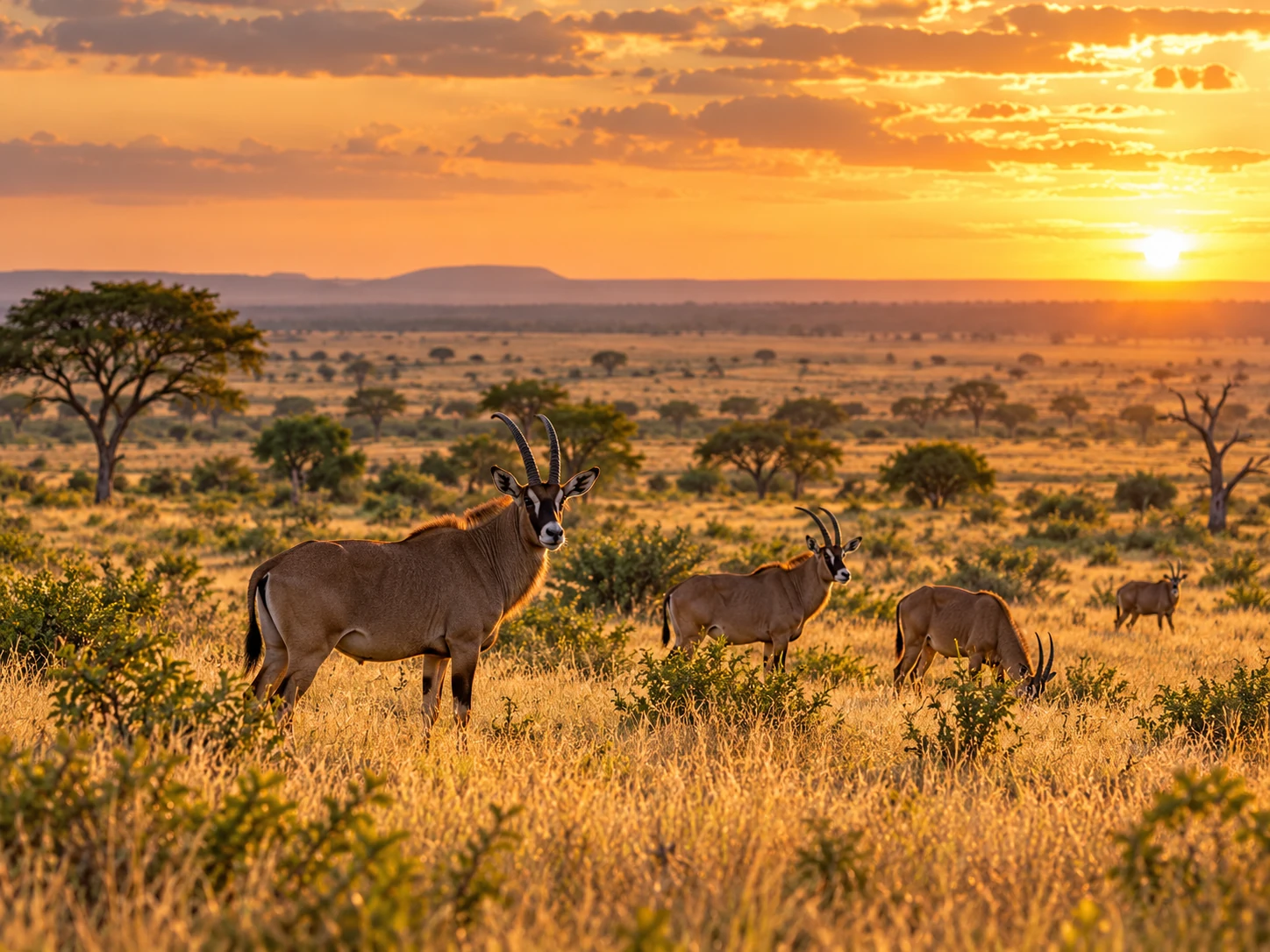
What to see, discover and enjoy
Nine experiences with themed images: big-cat roads, overlooks, bird hides, savanna and guided drives.
 Your savanna base
Satara Rest Camp
Sleep where lions roarMain rest camp in knob-thorn and marula savanna, with bungalows, camping, key safari services and nocturnal calls from hyenas, owls and lions at night.
📷 Use raking light across the bush and photograph from permitted areas.
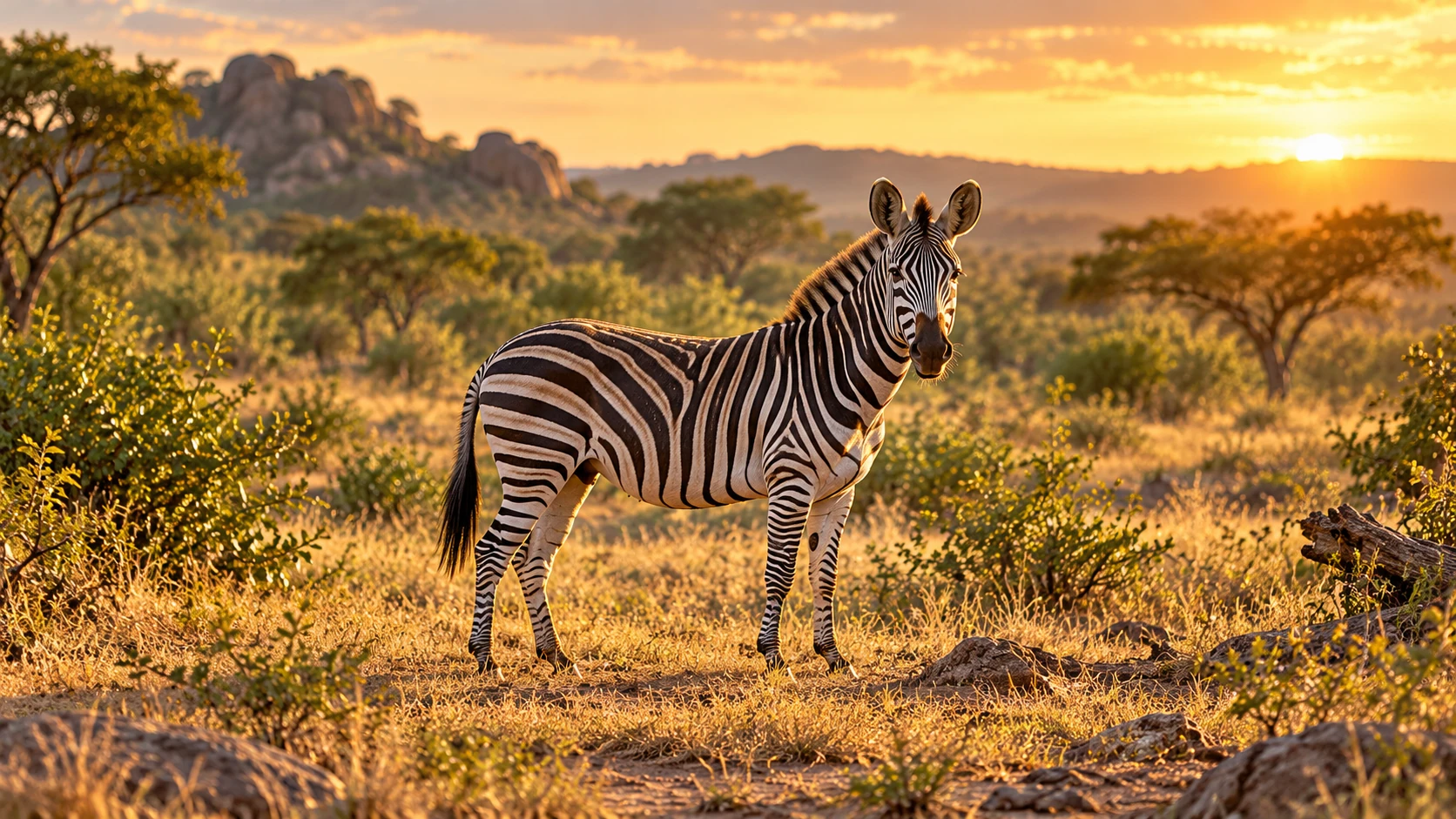 Western game drive · unhurried
H7 · Satara–Orpen
A road of grazing herdsThe H7 runs west from Satara to Orpen through savanna and grazing country. Scan for impala, zebra, wildebeest, giraffe and predators drawn by prey. Stops and road conditions determine journey length.
📷 Use telephoto plus wide herd compositions; never rush a sighting.
 Eastern drive · gravel road
S100 · N’wanetsi River Road
A celebrated predator corridorThis gravel road follows the N’wanetsi River east of Satara. It is popular for lion and leopard searching alongside prey-rich riparian habitats, but sightings are never guaranteed. Drive slowly and verify access.
📷 Scan tree shade and silhouettes early in the day.
Scenic road eastH6 · Rumbo a N’wanetsi
Big skies, lions and cheetahsThe H6 leads east toward the N’wanetsi picnic area across plains and savanna. Use the wide views to observe grazers, scanning patiently for distant cats.
📷 Frame wide horizons and wildlife in its habitat in soft light.
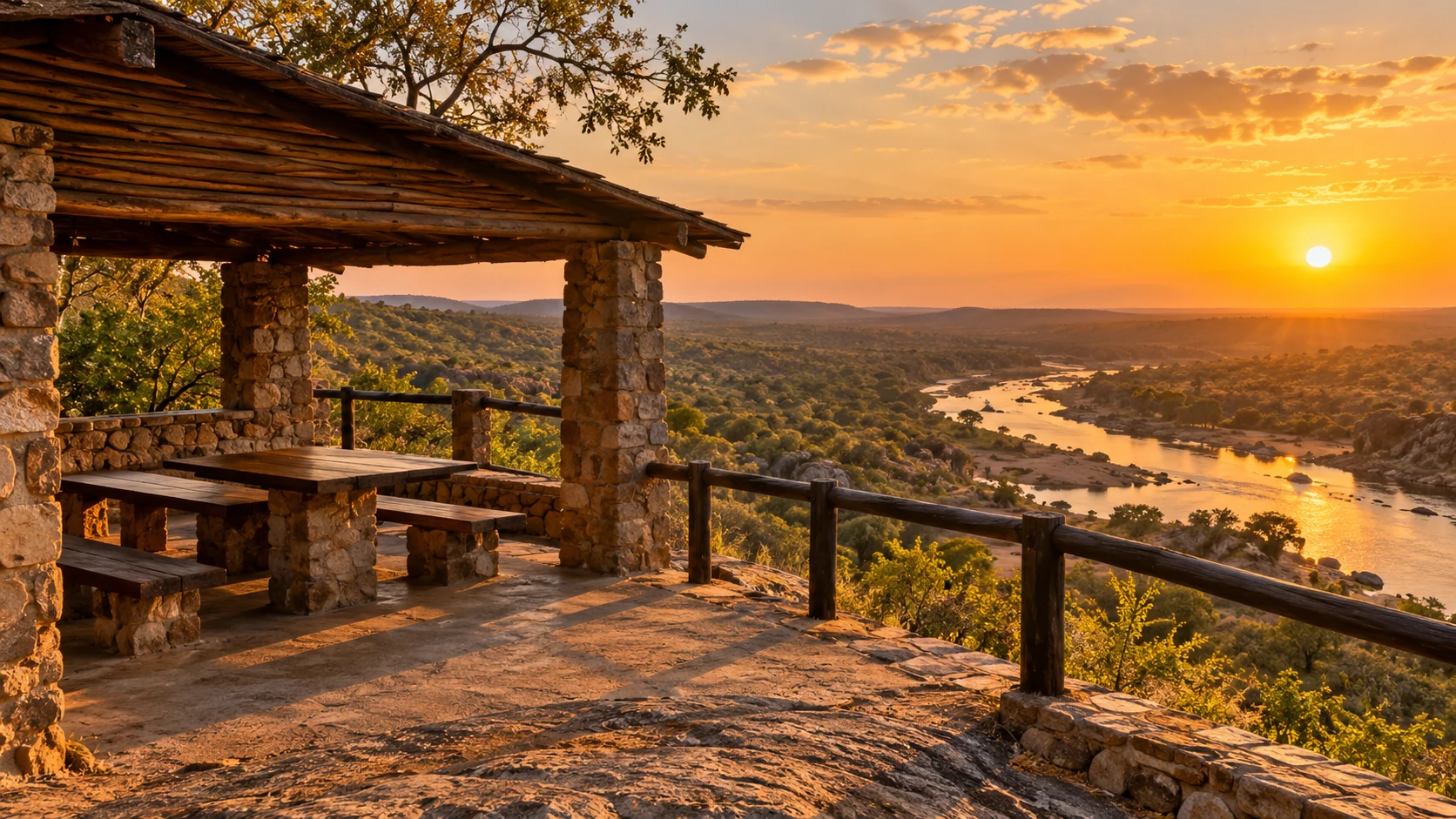 Authorised stop · H6
N’wanetsi Picnic Site & Lookout
An elevated river viewpointOfficial picnic area at the end of H6, around 25 km from Satara according to SANParks. Its viewpoint overlooks the N’wanetsi valley; verify facilities and access before travelling.
📷 Valley panoramas and changing light; stay within designated areas.
 Bird hide · S37
Sweni Bird Hide
A quiet hide alive with detailA bird hide near N’wanetsi off the S37, highlighted by SANParks for seasonal bird activity when exposed mud and water draw wildlife. Herons and small birds vary with rainfall. Confirm access.
📷 Long lens, fast shutter and patience with reflected light.
 Dawn · spring–summer
Plains north of Satara
Harriers and endless grasslandsSANParks highlights the open plains north of camp for seasonal Montagu’s and pallid harriers. The camp and grasslands also host weavers, starlings and many other birds.
📷 Watch for low hunting flights at dawn; stay in the vehicle.
 Dawn and late afternoon
Satara big cats
Lion, leopard and elusive cheetahSANParks identifies Satara as excellent big-cat country. Leopard searches reward patience around trees and drainage lines, whereas cheetahs favour open country. No species follows a fixed viewing schedule.
📷 Check big branches and shade; do not crowd vehicles.
 Pre-booked · subject to availability
SANParks guided drives
Explore with an expert trackerOfficial game drives may run at sunrise, sunset or at night depending on current schedules; bush walks require authorised guides. A safe way to learn about nocturnal wildlife without self-driving after hours.
📷 High ISO, stabilisation and full respect for guide instructions.
The Satara hero image and several thematic visuals on this page were created with AI to illustrate the destination. Other images come from the project’s editorial visual library. None documents exact locations or specific sightings in Satara.
Savanna hunters and the herds that draw them.
SANParks reports regularly recorded lion, leopard and cheetah around Satara, plus elephant, buffalo, rhino, wildebeest, zebra, giraffe, impala and honey badger. Search for raptors on the plains and listen to hyenas from inside camp at night.
Big cats and rhinos are never guaranteed. Early mornings and late afternoons often improve chances of watching active mammals, while the dry season generally opens sightlines.
Both calculators use editorial comparison scores, not tracked sightings or official statistical probabilities.
Premium wildlife sighting explorer
Month, time of day, area and safari hours change an editorial opportunity score for each animal. Explore and compare conditions.
Fine-tune your safari
These are comparative opportunity scores (0–100) based on editorial assumptions about habitat, broad seasonality, crepuscular activity and viewing effort. They are NOT measured sighting rates, scientific percentages or actual chances of encountering animals. SANParks does NOT publish these scores; wildlife cannot be guaranteed. Never use this estimate for safety decisions.
Read the scoring methodology
Each species starts with an unobserved editorial reference index; moderate seasonal, location and time factors are applied, along with a diminishing-return hours factor. Scores are capped to 0–100. Change controls to see how assumptions affect outputs. No real-time or verified sighting records are used.
Premium Big Five calculator
This second calculator focuses only on elephant, buffalo, lion, leopard and rhinoceros. It combines month, time window, area and observation hours to produce a comparative score per species and an editorial reading of the whole set.
Combined indices simulate editorial species scores under an unvalidated mathematical independence assumption. They are not recorded sightings or real-world probabilities; compare scenarios only. Satara excels for elephants and birds, but rhino is uncommon here.
One, two or three days: choose your pace
Flexible suggested itineraries, not confirmed gate schedules. Check current gate hours, road access and guided activities first.
- Camp opening↗
S100 · cats at first light
Explore a manageable section of S100, taking time to observe rather than cover distance.
- Late morning↗
Rest at Satara
Return to camp ahead of the heat for water, food and rest.
- Late afternoon↗
H7 · herds in golden light
Time your return for the official camp gate closing.
Photography & video
Shoot big cats with a long lens, grassland panoramas, herds and dawn light. Commercial productions may require SANParks permission; check official filming/photography rules.
Birdwatching
Watch birds from inside the camp and visit Sweni Bird Hide if open. Scan open grasslands for seasonal harriers.
Responsible driving
Respect 50 km/h on tar and 40 km/h on gravel; game viewing is normally much slower. Wildlife, works and high water can alter journey times.
Satara, Orpen and the S100, H6 and H7 game drives
Map pins use documented coordinates. Use place-search links for N’wanetsi, Sweni and the game drives; no unverified precise coordinates are invented.
Central Kruger savanna base for S100, H7 and H6.
Google Maps ↗If the interactive map cannot load, each experience still has a Google Maps link.
Sleep in Satara and explore safely
Floods or repairs may affect Kruger roads and facilities. Verify the status of S100, S37 and H6, and Satara camp hours before setting out. Calculator gate times are for planning only.
SANParks · Kruger ↗Accommodation & camp
Satara is a main rest camp with bungalows, camping, restaurant, shop and fuel. Confirm accommodation and available services before paying.
Getting here via Orpen
Satara is about 48 km from Orpen Gate. SANParks lists an approximate minimum driving time of 1 h 15 min from Orpen, excluding extended wildlife stops.
Best viewing windows
Start early and explore at the end of the afternoon. Night drives outside camp are only permitted with authorised park activities.
Seasons & vegetation
April–September is generally drier and vegetation is more open; October–March brings rains, green landscapes and summer birds.
Birding & lookouts
N’wanetsi is at the end of H6, around 25 km from camp. Sweni Bird Hide is in the S37 area. Check access locally.
Safety & photography
Stay in your vehicle outside authorised areas, never feed wildlife or reveal exact rhino locations. For commercial photography and filming, confirm SANParks permits.
+27 (0)13 735 6306/7
From Satara to the great north–south journey.
Explore the general Kruger guide, Letaba, Shingwedzi and Punda Maria.
Official sources & transparent methodology
Camp, wildlife, birding, picnic and coordinate information is based on SANParks publications. All visuals are illustrative, not evidence of local sightings. Percentage-style calculator values are non-statistical editorial comparison scores, never actual occurrence rates. Verify road and facility conditions before travelling.